 +86 187 3810 5965
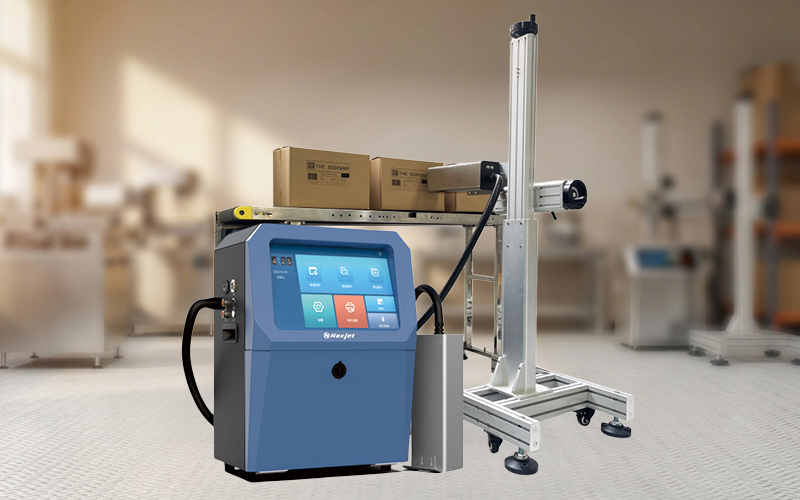
In high-speed, demanding production environments, coding clarity and system reliability are non-negotiable. While Thermal Inkjet (TIJ) and Continuous Inkjet (CIJ) are widely used for coding and marking. Piezo Inkjet (PIJ) is often chosen for high-resolution printing. It is also preferred for printing large characters.
Unlike thermal systems that use heat, PIJ uses the mechanical movement of piezoelectric ceramic crystals to spray ink. It is a non-contact, drop-on-demand (DOD) printing technology.
Micro electro-piezoelectric inkjet technology involves placing numerous small piezoelectric ceramics near the nozzle of the inkjet printer. These ceramics deform when voltage is applied.
The piezoelectric ceramics expand and contract. This pushes ink out of the nozzle. The ink forms patterns on the output surface.
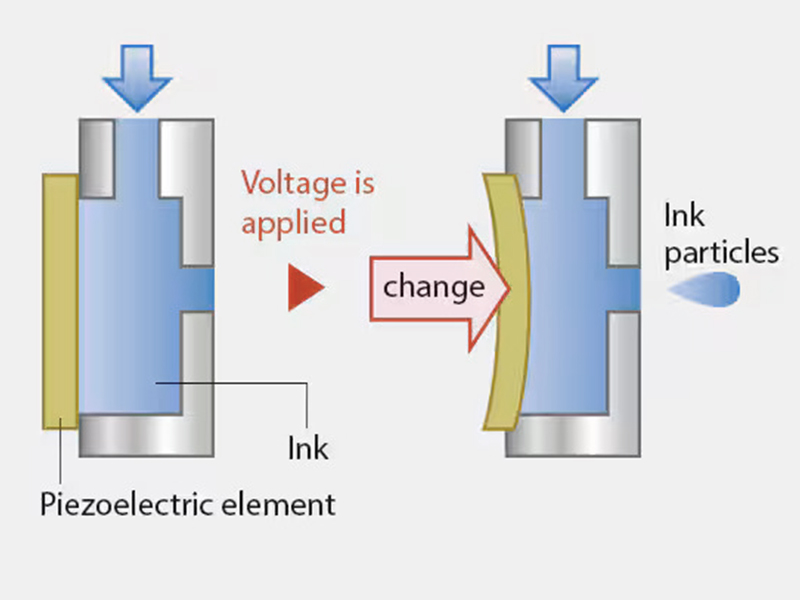
The micro electro-piezoelectric technology divides the ink droplet control in the inkjet process into three stages:
Before the inkjet operation, the piezoelectric element first slightly contracts under the control of the signal;
Then, the element extends to push the ink droplet out of the nozzle.
When the droplet is about to leave, the element contracts again.
This neatly and efficiently lowers the ink level at the nozzle.
Thus, the ink droplet level is precisely controlled. Each ejected droplet has a perfect shape and correct flight direction.
Mechanical force controls ink droplets precisely. This makes droplet shapes more uniform.
It also improves flight direction accuracy. Variable droplet sizes are possible, such as 1.5 pl to 12 pl. While maintaining the printing speed, it can also achieve fine image quality, making it highly suitable for high-quality photo printing.
No heating is needed during the process.
This allows piezoelectric technology to work with many inks, like UV and solvent inks.
It also supports a wide range of applications. This flexibility allows manufacturers to select the most suitable ink formulation for their specific substrate and production environment.
Ink Type | Ideal Substrate | Key Advantage |
Oil-Based Ink | Porous materials (Corrugated boxes, paper, wood) | Instant absorption, zero maintenance, never dries on the nozzle face. |
Solvent-Based Ink | Semi-porous and non-porous (Plastics, metals, coated films) | Fast drying times, excellent adhesion on smooth surfaces. |
UV-Curable Ink | Non-porous industrial materials (PVC, glass, glossy packaging) | Instant curing via UV LED light, highly scratch-resistant, vibrant contrast. |
They avoid wear from repeated heating and cooling. This makes them more durable. It also lowers long-term usage costs.
Since heating is eliminated, energy use is reduced. The working temperature stays more stable.
Most industrial PIJ printers can achieve resolutions ranging from 180 DPI to 600 DPI or higher. Combined with precise droplet placement and grayscale printing, PIJ technology produces sharp text, dense barcodes, and detailed graphics. They stay readable even at small character sizes.
The key advantage of piezo technology is precise droplet control.
Unlike CIJ systems, which primarily focus on speed, PIJ printers can control droplet volume with exceptional accuracy.
Benefits include:
This makes PIJ technology particularly suitable for secondary packaging and product decoration applications.
A piezo high resolution inkjet system can handle various coding needs including:
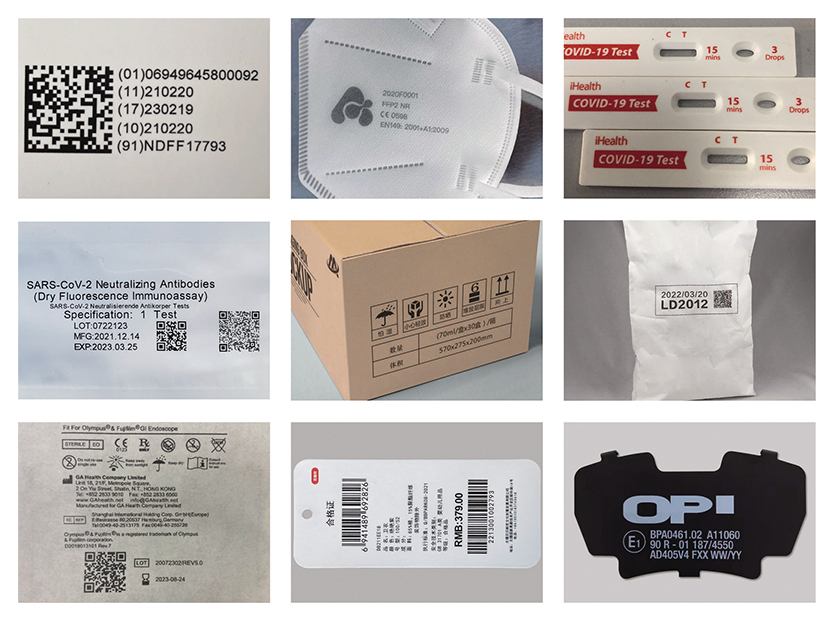
NAXJET PIJ inkjet system can also support database-driven variable data printing for track-and-trace applications.
For production lines requiring high-resolution data matrix codes, crisp logos, and multi-line alphanumeric text directly on secondary packaging, the mechanical precision of PIJ remains the industry gold standard.
PIJ technology prints on corrugated cartons, flexible packaging, pharmaceutical boxes, and industrial materials.
It delivers the precision, reliability, and flexibility modern production lines need.