 +86 187 3810 5965
Inkjet coding and laser marking run through every crucial stage from the production line to the hands of consumers, playing a core role in different packaging materials and industry applications.
From PET bottles and metal jars to cardboard boxes and film packaging, various materials, shapes and production rhythms all correspond to specific inkjet printing technologies and solutions.
Here we list the typical packaging types and recommended inkjet printing or laser marking solutions.
Packaging type | Coding and marking technology | Main uses |
Bottle (PET) | High resolution Inkjet printer(PIJ), CIJ, Laser marking | Directly engrave brand information and traceability code. |
Bottle cap and Can cap | CIJ, Piezo Inkjet technology, Laser marking | To achieve “One item, one code” anti-counterfeiting and marketing, QR codes can be engraved on curved surfaces. |
Metal can | Fiber Laser marking, CIJ | Suitable for ultra-high-speed production lines. |
Flexible packaging | TTO, TIJ | High-resolution coding, resistant to friction, and capable of seamless integration into packaging machines. |
Carton boxes and Corrugated boxes | High resolution Inkjet, CIJ | The rough surface is clearly printed. It supports large-format and multi-sided printing. |
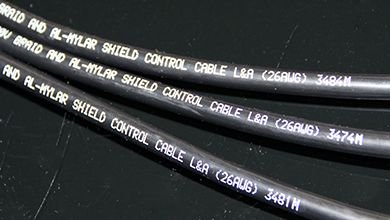
Pipe line and Wire | Laser marking machine | Continuous inkjet printing on high-speed extrusion lines |
Glass bottles | CO2 laser, UV laser | Permanent etching, suitable for high-end products, featuring durability and brand quality. |
Medical blister and Medicine boxes | Laser, CIJ | Achieving permanent high-precision identification on aluminum foil or paper boxes |
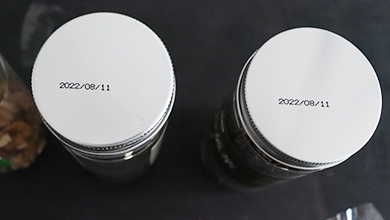
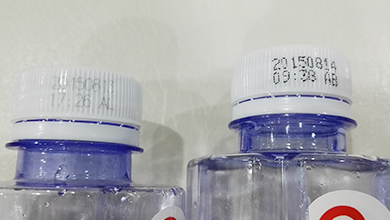
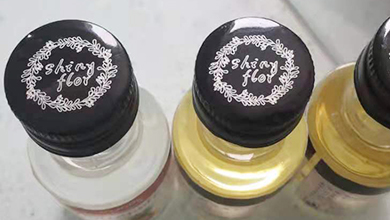
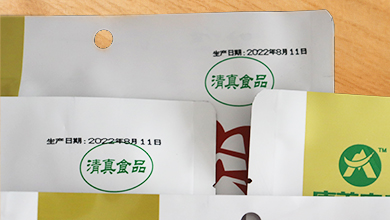
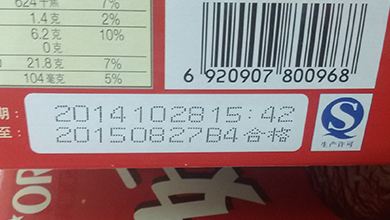
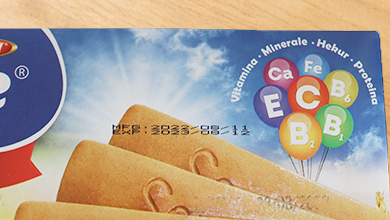
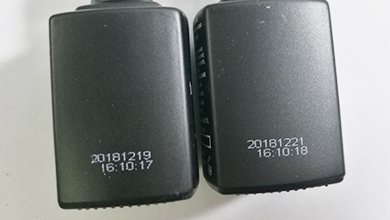
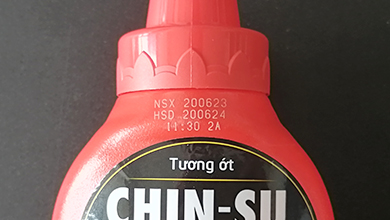
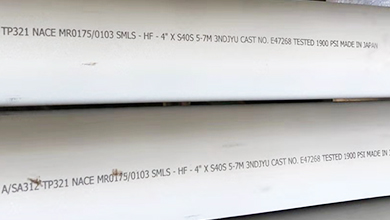
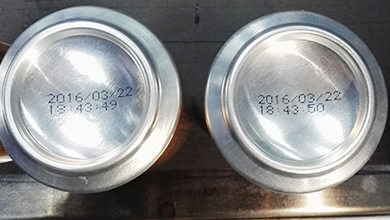
Inkjet printing is a crucial step in meeting regulatory requirements for food safety and drug traceability. According to the Food Safety Law, canned food packaging must clearly indicate the production date, shelf life, and batch number.
By printing batch numbers, full-process linkage with raw materials, production data, and quality inspection reports is established, thereby supporting precise product recalls and quality control.
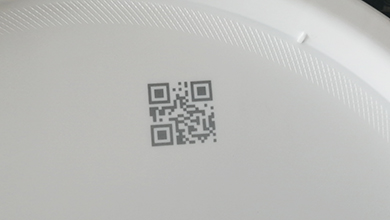
The anti-counterfeiting coding enable product tracking through a unique identification code (anti-counterfeiting code + logistics code). They can be presented in the forms of QR codes, barcodes, variable hidden codes, etc., and possess features such as one-item-one-code, multi-level distribution price control management, and anti-reuse measures against tearing.
Seamless integration of the inkjet printer and packaging machine increases the coding speed by more than three times compared to traditional inkjet printers, and the elimination of consumable replacement requirements improves the overall efficiency of the equipment by 15% to 20%.
Inkjet printing technology has evolved from simple date printing into a comprehensive solution integrating compliance traceability, intelligent management, and anti-counterfeiting and anti-diversion measures.
If you'd like to learn how to balance cost, speed, and effectiveness in a specific scenario, or if you'd like to learn more about the technical selection details for a particular type of packaging, feel free to let us know.