 +86 187 3810 5965
Flexible film packaging manufacturers have relied on thermal transfer overprinting (TTO), a relatively mature encoding method. However, with the development of technology and the increasing demand for higher speed and precision in production, Piezo inkjet printing system is gradually becoming a better choice.
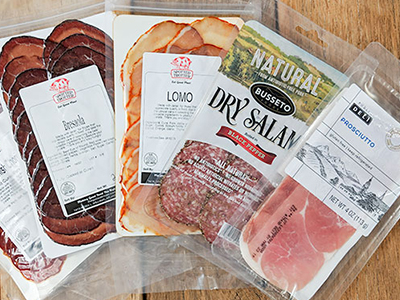
How does a PIJ high-resolution inkjet printer work? PIJ is a coding system that employs "Drop-on-Demand" technology to directly jet tiny ink droplets onto the surface of a film, requiring no physical contact.
How does TTO work? TTO is a method that utilizes heat and pressure to transfer ink from a ribbon onto the surface of a substrate.
The key difference lies in contact vs non-contact printing.
➡️Learn more about our product: PIJ high resolution inkjet printer / TTO coding system
Feature | PIJ (Piezo Inkjet) | TTO |
Printing Method | Non-contact | Contact |
Speed | High (150–300 m/min) | Medium |
Print Quality | Up to 600 DPI | Around 300 DPI |
Consumables | Ink only | Ribbon required |
Material Compatibility | Flexible + rigid | Mainly flexible film |
Maintenance | Low | Medium |
Application scenarios represent the most intuitive and fundamental difference between the two technologies.
TTO (Thermal Transfer):
Primarily used with intermittent packaging machines that well-suited for coding on stationary packaging film. TTO is not suitable for direct printing on high-speed, continuously moving production lines.
PIJ (Piezoelectric Inkjet):
Primarily used for high-speed, in-line production. It enables non-contact coding on the surfaces of products moving at high speeds (such as bottle caps, can bottoms, cartons, cables, etc.). This non-contact coding approach means that a piezoelectric high-resolution inkjet printer can effectively handle uneven or curved surfaces.
The Thermal Transfer Overprinting (TTO) system is typically effective only on flat, smooth, and flexible packaging materials, such as laminated films. Its reliance on physical contact makes it unsuitable for rigid or irregular surfaces.
On the other hand, PIJ (Piezo Inkjet) operates via a non-contact mechanism and utilizes specialized fast-drying inks (such as solvent-based or UV-curable inks). PIJ inks offer superior adhesion even if the product surface is:
Rigid or Curved: Plastic bottles, metal cans, or containers.
Challenging Environments: Surfaces contaminated with oil or dust.
Furthermore, for porous packaging materials like uncoated paper or cardboard boxes, PIJ technology allows for direct ink penetration. This direct application results in significantly lower operational costs compared to ribbon-based systems.
Print quality directly impacts visual appeal and corporate image.
When printing high-precision small text or barcodes on flexible film packaging, TTO systems typically offer high resolution (commonly 300 dpi). However, when applied to surfaces classified as "rigid," TTO systems are prone to producing blurry prints due to slight deviations in product positioning.
When it comes to visual clarity, high-resolution inkjet systems are in a league of their own. These inkjet printing machines utilize piezoelectric crystals to pulse ink through hundreds of tiny nozzles, achieving resolutions of 600 dpi—or even higher.
Additionally, PIJ technology ensures that even the most complex variable data—such as QR codes and barcodes—remains fully scannable on the packaging.
Consumables are a key concern for many producers and manufacturers, as they directly impact their ongoing operational costs.
In terms of consumable costs, PIJ technology holds a distinct advantage.
The core consumable for TTO systems is the thermal ribbon. Ribbons are single-use consumables; regardless of the actual content being printed, a full segment of the ribbon is consumed with every print cycle. For applications involving large print areas or extremely high production volumes, the consumable costs associated with TTO systems can rise significantly.
The consumable for PIJ systems is ink. As an "on-demand" inkjet technology, ink is consumed only when content is actively being printed (no ink is consumed during idle periods). For variable data applications (such as unique item codes or barcodes) or large-area printing tasks, the ink costs associated with PIJ systems are typically lower than the ribbon costs associated with TTO systems.
In modern manufacturing, PIJ technology is built for the high-speed requirements of Industry 4.0.
Linear Speed: Modern PIJ systems can maintain high-resolution output at speeds exceeding 150–300 m/min, comfortably outperforming many TTO setups which may struggle with ribbon breakage or "ghosting" at high velocities.
Zero-Stop Ribbon Changes: One of the biggest bottlenecks with TTO is stopping the line to change a ribbon. With PIJ’s high-capacity ink tanks, you can often refill ink “on the fly” without stopping production, maximizing your Overall Equipment Effectiveness (OEE).
In comparison, PIJ is more suitable for manufacturers with high-speed production, high-precision requirements, and multi-material coding needs, such as the following specific requirements: high-speed packaging lines, variable data printing, and flexible + rigid packaging.